Portfolio
Work in Progress · In ArbeitEvidoxa — Testing a Product Idea in Humanities Research
The starting point was a recurring request in conversations with historians: bring people, places, sources and relationships together in a tool they could use without extensive technical preparation. I took responsibility for shaping the product and building the prototype with AI assistance. The hypothesis concerns the fit between research practice and software, rather than an assumption that the field lacks capable tools.
Process
Phase 01
Start with the research practice
Conversations suggested a need for a connected workspace for historical material. I used that need to frame the product: preserve the relationships that matter to research while keeping the technical entry burden manageable.
Phase 02
Use a working prototype to think
Building directly with Cursor, Next.js and MUI made interactions available for inspection early. The prototype helped me explore the idea as working software. AI shortened the route to a build, while I remained responsible for the product decisions and their assessment.
Phase 03
Let domain modelling challenge the interface
Repeated data-model revisions exposed the gap between a useful conceptual model and a workable storage structure. I learned to distinguish those layers from the interaction model, then develop them together. Flexibility in one layer created obligations in the others.
Phase 04
Expand the scope where the work requires it
Feedback led me to add collaborative projects and bibliography integration. These additions addressed how research is shared and referenced, while also increasing the scope that subsequent validation would need to cover.
Phase 05
Move towards use with real material
The planned next stage is a broader trial with researchers using their own sources and relationships. It should reveal whether the product supports real work and where the current concept needs revision.
Methods
AI-assisted development
AI helped build and explore technical options; it did not establish whether the product choices were appropriate.
Domain modelling
People, places, sources and relationships needed representations that worked for both the domain and the implementation.
Prototype the interaction
Working interactions made the idea easier to examine and its constraints harder to overlook.
Let feedback inform scope
Collaboration and referencing entered the scope through feedback, with their usefulness still to be established in extended use.
Visuals
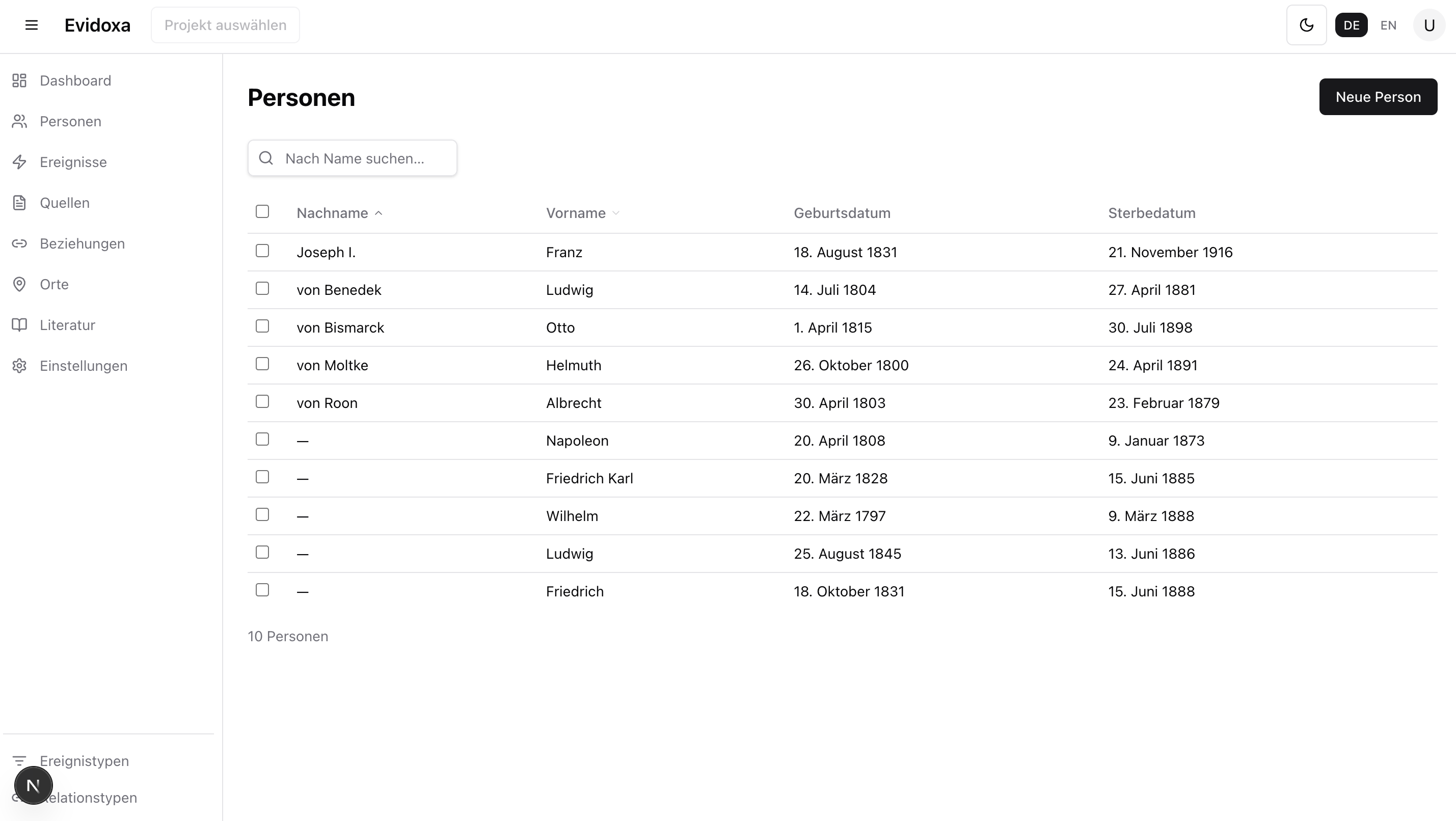
The MVP’s people overview provides an entry point into the research data.
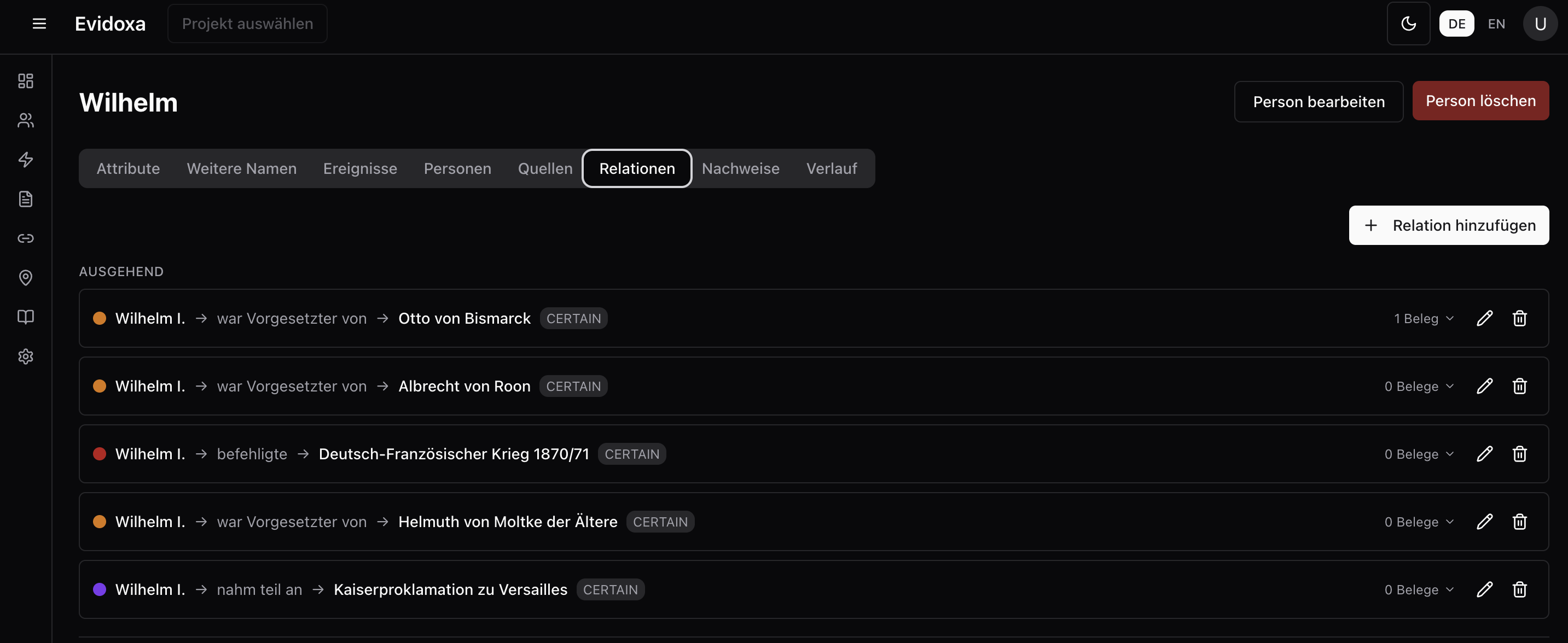
Person relationships as represented in the prototype.
Key Takeaways
Working software sharpens the questions
Tangible interactions made it easier to distinguish promising choices from unresolved ones.
Technical understanding improves the concept
Revising the data model changed how I understood both the research task and its possible interface.
A stated need starts the investigation
A recurring request is a reason to explore. Whether this particular solution fits daily practice is a further question.
Scope has a learning cost
Adding a capability expands the set of assumptions requiring validation as well as the amount of software.
The documented version is a working MVP with user management, collaborative projects, a flexible data model and bibliography integration. Broader validation in actual research remains ahead. The next test is whether researchers can use it meaningfully with their own material over time. A functioning build and initial feedback justify that investigation, without yet establishing sustained adoption.